 Image 1 of 1
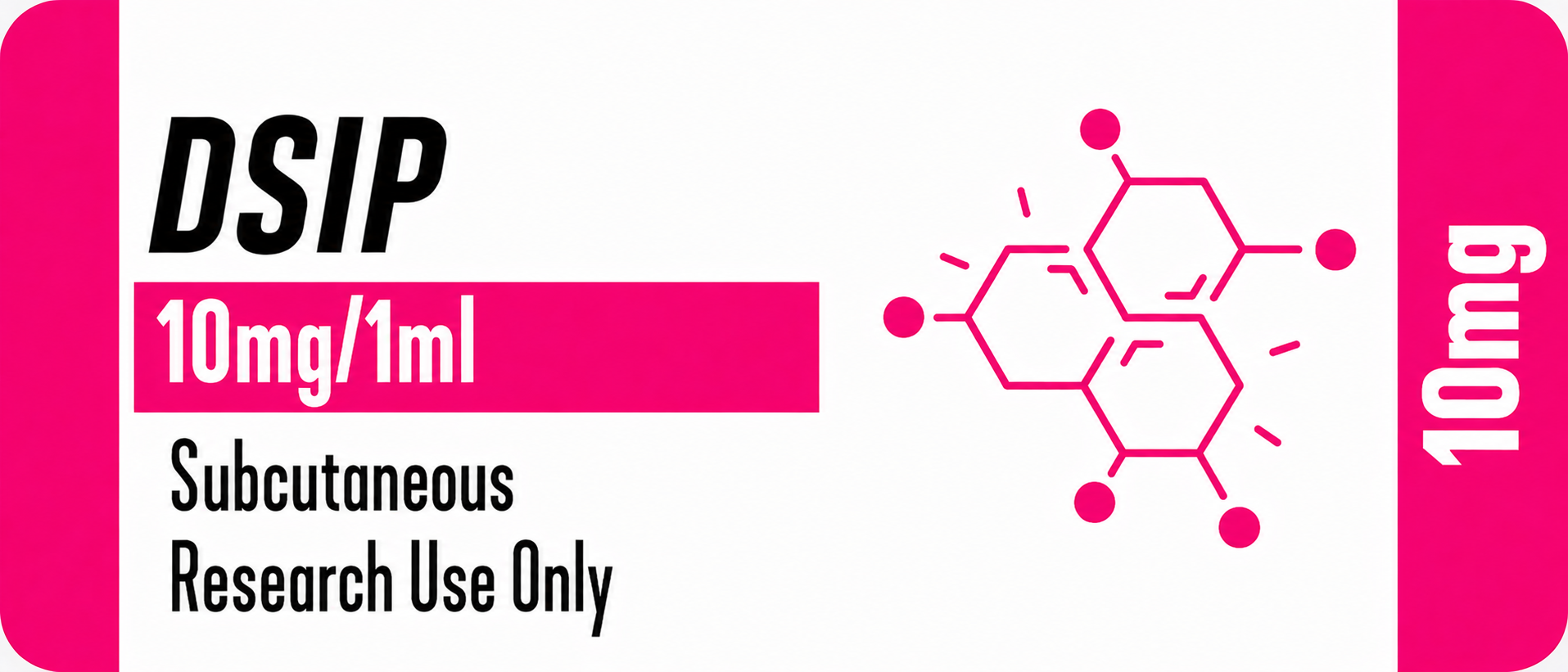
DSIP is a naturally occurring neuropeptide that has been studied for its effects on sleep regulation, stress response, circadian rhythm support, and recovery. While its exact mechanism remains unclear, research suggests it may influence neurotransmitters and hormone release involved in sleep quality and restorative rest. DSIP is commonly investigated for insomnia, disrupted sleep patterns, stress-related sleep disturbances, and recovery optimization.
Common Research Dosing Protocol:
100-300 mcg administered 30-60 minutes before bedtime
Some protocols use 500 mcg nightly for more significant sleep disturbances
Typical range: 100-500 mcg per day
Typical cycle length: 2-8 weeks
Administration:
Subcutaneous injection
Usually administered in the evening before sleep
Some users reserve it for nights when sleep quality is expected to be poor
Storage:
Refrigerate at 36-46°F (2-8°C) after reconstitution
Protect from light
Do not freeze
Use sterile technique for all withdrawals
Notes:
DSIP does not typically function as a traditional sedative. Many users report improvements in sleep quality, sleep depth, and feeling more refreshed upon waking rather than immediate drowsiness. It is commonly stacked with growth hormone secretagogues such as Tesamorelin, Ipamorelin, or CJC-1295 in recovery-focused protocols. Effects can vary considerably between individuals, with some experiencing substantial sleep improvements and others noticing little effect.
DSIP is a naturally occurring neuropeptide that has been studied for its effects on sleep regulation, stress response, circadian rhythm support, and recovery. While its exact mechanism remains unclear, research suggests it may influence neurotransmitters and hormone release involved in sleep quality and restorative rest. DSIP is commonly investigated for insomnia, disrupted sleep patterns, stress-related sleep disturbances, and recovery optimization.
Common Research Dosing Protocol:
100-300 mcg administered 30-60 minutes before bedtime
Some protocols use 500 mcg nightly for more significant sleep disturbances
Typical range: 100-500 mcg per day
Typical cycle length: 2-8 weeks
Administration:
Subcutaneous injection
Usually administered in the evening before sleep
Some users reserve it for nights when sleep quality is expected to be poor
Storage:
Refrigerate at 36-46°F (2-8°C) after reconstitution
Protect from light
Do not freeze
Use sterile technique for all withdrawals
Notes:
DSIP does not typically function as a traditional sedative. Many users report improvements in sleep quality, sleep depth, and feeling more refreshed upon waking rather than immediate drowsiness. It is commonly stacked with growth hormone secretagogues such as Tesamorelin, Ipamorelin, or CJC-1295 in recovery-focused protocols. Effects can vary considerably between individuals, with some experiencing substantial sleep improvements and others noticing little effect.